The Laughers

Giggling begins. It starts with one student, but it spreads like a yawn. The laughers lose control, their bodies shaking and the sound taking on the edge of mania. Some put their heads down on their arms, shoulders pulsing even as they muffle the sound.  

I remember teenage emotions. The laughter, the heartache, the love, the tears. How much emotional intensity is due to newness, the personal inexperience with life, with feelings?  

Experience is a wonderful teacher, but it also wears down the extremes. Though I’m glad I no longer feel the intensity of hurt that came with the disappointments and tragedies of youth, experience also takes away some of that perfect joy.  

I still feel the edges of it sometimes. The laughter will linger, approaching that barrier, but there is too much control now. Is it about learning to let go, or remembering how to? 

Teaching young people does keep you young, partly because it reminds you of what being young is like. But while most experiences build our capacities, observing youth reminds you of how much is taken away by the years.  

We follow nature

Last weekend we got about 4 inches of rain overnight. When I went on a hike, and saw what’s in this video, I thought “Funny how the water followed the path.”

Who follows who?

My mind immediately alerted me to a potential fallacy. A “which came first” idea presented itself. Isn’t it more likely that water made this path? Rain overflow creates little streams, especially in the spring. Some are freshets, have a relatively deep bed, and can run for months if its a wet season. Not great for a path.

But a lot of time there are washes for when a big storm overflows the system of ponds and streams and rivulets, and more water runs off. As water always does, it tends to gather and find a way to flow down. I’m thinking these are the path makers: yes they get wet, but only briefly, and dry fairly quickly, which means we can walk on them most of the time.

Humans are smart, and you can also say we’re either thrifty or a bit lazy. It is far easier to follow a path given to us by nature than to have to hack a new path through its bushes, trees and tangles.

So my new thought is: “Look how we follow that path of water.”

Jinx

#Tankatuesday is quite a challenge this week. To celebrate Colleen M. Chesebro’s birthday, we are asked to write a poem with 65 syllables. We also get to name our poem type, and I’m calling mine a “Jinx” because it has 13 lines. Each line has five syllables, totaling 65. Believe me, that math was not easy for me.

Jinx 


Falling up the stairs. 

Step on the stair that 

Is not there. Find your 

Balance or fall down. 

Feel the flailing fear. 


Black cats, cracked mirrors. 

Walk under ladders. 

No thirteenth floor, no 

Button for thirteen 

in elevators 


We walk away from 

Our superstitions 

And we gain true strength.  


Here is the link to the challenge!

Ancient Shepherd

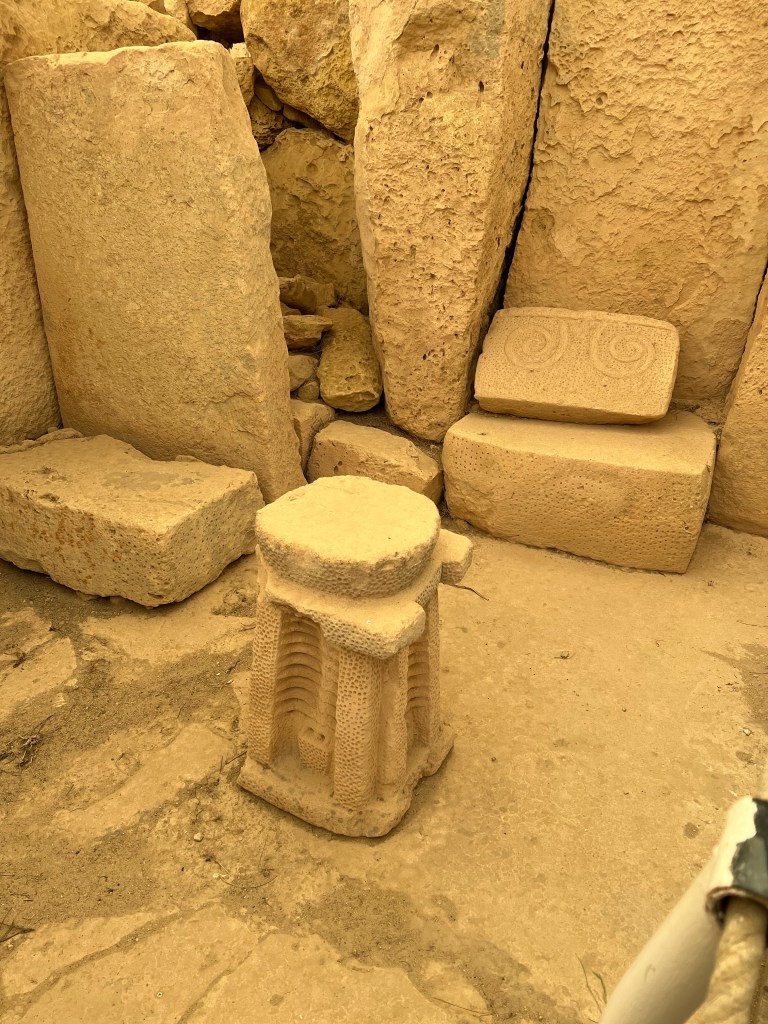
There were so many stunning, ancient and wonderful sights that we saw on our recent trip to Malta. One that really stuck with me wasn’t an ancient building or beautiful nature scene: it was a shepherd. 

His face was as old and worn as the stone he walked on. He grazed the sheep on the Dingle Cliffs overlooking the Mediterranean Ocean. The sheep chewed on the scraggly bushes amid the desert yellow of the pitted cliff.  

The only disappointment was his shepherd’s crook. I hoped for an ancient staff, a Wizard level stave. Instead, it was made of PVC tubing. The contrast with his ancient face was nearly hilarious.  

What really amazed me was not just the man. It’s the tradition. How many years does his family go back, or the traditions that were handed down to him? On an island that boasts one of the oldest Neolithic sites in the world, it’s possible we are talking about millenniums of shepherding. 

At one point, he spoke to the sheep and threw a stone near them. The sheep moved without hesitation. Perhaps this little trick is as old as the stone columns that made up the ancient temples.