
My Tanka for this photo is below. The photo is from Terri Webster Schrandt at https://secondwindleisure.com/
Purple is passion,
Creative and sensual
Purple is heartache
Passion and heartache always
In tension, foes, companions

Make your own here.
My Tanka for this photo is below. The photo is from Terri Webster Schrandt at https://secondwindleisure.com/
Purple is passion, Creative and sensual Purple is heartache Passion and heartache always In tension, foes, companions Make your own here.

The emphasis on “POW” in the title is a bit of a joke, but also reveals what I want to say about Nature’s profound strength.
This picture shows that so effectively. Yes, this sprout did not shoot up with a comic book “POW!!!” Instead, what is revealed is the slow, implacable ability for this single green plant to break through a layer of asphalt. What a profound example of how persistently following the path of growth makes a being nearly irresistible.
Thoreau and the Taoists both talk about this strength. Thoreau wanted “to travel the only path I can, and that on which no power can resist me.” Asphalt is poured so its elements melt together and harden. They should stop a mere plant from sprouting. But that plant is doing what it must, what Nature demands of it, and no mere human concoction is going to stop its growth.
Today I am going to think with my sprout mind, and I am going to find the barriers that are stopping my growth. Then I’m going to find the natural path to overcome them.
I have a colleague who is one of the kindest people I know. She puts other people first all the time, and, as a teacher, puts her heart and soul into teaching and supporting students. Due to her incredibly positive nature, I feel like a monster criticizing her.
But it was due to her that I developed my philosophy about how politeness becomes rudeness. It came about when she held the door for me at the entrance of the school. Of course, this is a polite thing to do. UNLESS the person is very far away. This induces the person to feel like they need to speed up, perhaps even run. Even if the person says, “You don’t need to run,” it’s hard not to feel like you are inconveniencing the person holding the door.
A similar thing happens at four-way stop signs. Now, sometimes who should go next can be confusing: two or more people may get to the signs at almost the same moment. What I’m talking about is when someone clearly gets there first but starts to wave people through. I don’t think this is helpful. There is a clear pattern that works and should be followed. Breaking that pattern just confuses everyone, and cars buck forward and stop as each person tries to go. It looks like a bunch of wildebeest pretending to charge each other, and no one knows which one is dominant.
I believe in kindness, and I am a polite person. I am so polite, indeed, that I know when kindness warps into rudeness.
I have to go with what I see with this one, even though it is obviously not what is being portrayed in this painting.

I see her holding a phone

And just walking right past him.

Dreams and flowers wilt.
Join the fun here.
Giggling begins. It starts with one student, but it spreads like a yawn. The laughers lose control, their bodies shaking and the sound taking on the edge of mania. Some put their heads down on their arms, shoulders pulsing even as they muffle the sound.
I remember teenage emotions. The laughter, the heartache, the love, the tears. How much emotional intensity is due to newness, the personal inexperience with life, with feelings?
Experience is a wonderful teacher, but it also wears down the extremes. Though I’m glad I no longer feel the intensity of hurt that came with the disappointments and tragedies of youth, experience also takes away some of that perfect joy.
I still feel the edges of it sometimes. The laughter will linger, approaching that barrier, but there is too much control now. Is it about learning to let go, or remembering how to?
Teaching young people does keep you young, partly because it reminds you of what being young is like. But while most experiences build our capacities, observing youth reminds you of how much is taken away by the years.
Last weekend we got about 4 inches of rain overnight. When I went on a hike, and saw what’s in this video, I thought “Funny how the water followed the path.”
My mind immediately alerted me to a potential fallacy. A “which came first” idea presented itself. Isn’t it more likely that water made this path? Rain overflow creates little streams, especially in the spring. Some are freshets, have a relatively deep bed, and can run for months if its a wet season. Not great for a path.
But a lot of time there are washes for when a big storm overflows the system of ponds and streams and rivulets, and more water runs off. As water always does, it tends to gather and find a way to flow down. I’m thinking these are the path makers: yes they get wet, but only briefly, and dry fairly quickly, which means we can walk on them most of the time.
Humans are smart, and you can also say we’re either thrifty or a bit lazy. It is far easier to follow a path given to us by nature than to have to hack a new path through its bushes, trees and tangles.
So my new thought is: “Look how we follow that path of water.”
Haven’t written in a bit, but I’m back with another #tankstuesday
This one is an actual tanka, 5-7-5-7-7 syllabic form.
I am wandering

Even though I know this trail.

The green buds are new.

Dressing the familiar in

Bright and renewing beauty.
Hope you like it! Join in here.
#Tankatuesday is quite a challenge this week. To celebrate Colleen M. Chesebro’s birthday, we are asked to write a poem with 65 syllables. We also get to name our poem type, and I’m calling mine a “Jinx” because it has 13 lines. Each line has five syllables, totaling 65. Believe me, that math was not easy for me.
Jinx


Falling up the stairs.

Step on the stair that

Is not there. Find your

Balance or fall down.

Feel the flailing fear.


Black cats, cracked mirrors.

Walk under ladders.

No thirteenth floor, no

Button for thirteen

in elevators


We walk away from

Our superstitions

And we gain true strength.
Here is the link to the challenge!
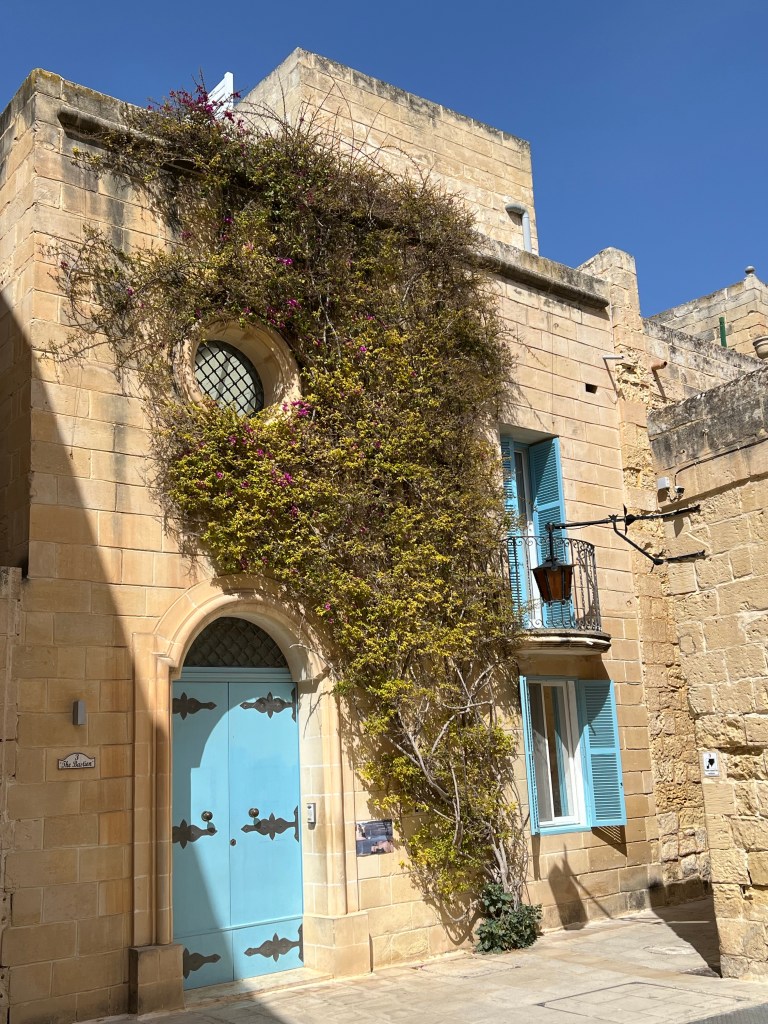
This famous purple Bougainvillea from the ancient city of Mdina fulfills the “pastorals and pastels” quality of this weeks challenge.

Join the challenge here
Petals curl backwards
Or forwards. Does it matter
As flowers unfurl?
 Mark Bozeman